The Doctor's Dilemma in the Digital Age
Picture this: AI, a nascent intelligence, is like a brilliant, eager medical student, poised to tackle healthcare's most formidable challenges. But to truly learn and innovate, it requires a vast library of case studies, millions of patient charts, each a unique narrative of health and illness. The problem? These charts are not mere data points; they are deeply personal stories, repositories of our most private, sensitive health information.
We find ourselves caught in a paradoxical situation. We yearn for the transformative potential of AI in medicine, envisioning a future of personalized treatments and predictive diagnostics. Yet, we hesitate to freely hand over our medical data, a decision steeped in valid concerns about privacy and ethical boundaries. It's a massive roadblock, a Gordian knot that seems impossible to untangle.
But what if we could circumvent this impasse? What if we could create a flawless, privacy-preserving "stunt double" for our medical data, a synthetic representation that mirrors the intricacies of reality without exposing any individual's confidential information? Enter the captivating world of synthetic data, a realm where the "fake" holds the key to unlocking a healthier future.
AI's Been in Medicine Longer Than You Think (A Quick Trip in the Time Machine)
The integration of AI into medicine is not a recent phenomenon; it's a gradual evolution spanning decades. Let's embark on a brief, non-boring journey through time.
Imagine the 1970s: computers were clunky, and algorithms were rudimentary. Yet, even then, pioneers were experimenting with AI in healthcare. Meet MYCIN, a rule-based expert system designed to diagnose bacterial infections. It was far from perfect, often resembling a novice medical student making educated guesses, but it was a pivotal first step.
Fast forward to the 21st century, where the "Big Data" explosion has revolutionized the landscape. AI algorithms, empowered by machine learning, have become exponentially smarter – and equally data-hungry. They now devour information from Electronic Health Records (EHRs), wearable devices, genetic profiles, and a myriad of other sources.
The point is clear: AI has evolved from a curious intern to a sophisticated, data-devouring expert. This evolution has set the stage for today's data dilemma, highlighting the urgent need for innovative solutions like synthetic data.
The Trouble with Real Data (It's Messy and Full of Secrets)
Let's confront the controversies surrounding the use of real-world clinical data head-on.
First and foremost, we grapple with the privacy nightmare. Our health data is not just personal; it's legally protected by regulations like HIPAA. Using it for AI training without proper safeguards is akin to navigating a minefield, fraught with the risk of data breaches and privacy violations.
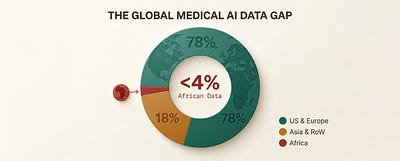
Then there's the bias trap. Real-world data is a reflection of the world itself, complete with its inherent biases and inequalities. If an AI is exclusively trained on data from a specific demographic, its "brilliance" becomes dangerously skewed for everyone else. Consider the example of an AI algorithm incorrectly flagging cancer risk for certain groups due to skewed training data. The consequences can be devastating.
Finally, we encounter the Fort Knox problem. Vast quantities of data are locked away in disparate hospital systems that operate in silos, hindering seamless data exchange. The logistical challenges of aggregating enough data for AI training are often insurmountable.
The "Fake" Stuff to the Rescue! (Why Synthetic Data is a Game-Changer)
Synthetic data is an artificially generated dataset that meticulously mimics the statistical patterns and relationships found in real patient data. It's the ultimate "digital twin," capturing the essence of reality without compromising any individual's private information.
Synthetic data offers a plethora of superpowers:
- Privacy-in-a-Box: Researchers can freely test, train, and innovate without ever coming into contact with sensitive patient information.
- De-biasing the System: We can intentionally engineer datasets that are more balanced and representative, training AI algorithms to be fair and equitable from the outset.
- Unlocking Rare Disease Research: Faced with a paucity of data on a rare condition? Generate a virtual cohort of patients to study, accelerating research and improving patient outcomes.
- Fueling the Digital Health Boom: Synthetic data enables developers to safely test new health apps, wearables, and software, fostering innovation in the digital health space.
Hold On, Is It Too Good to Be True? (The Skeptics Chime In)
It's time for some healthy skepticism. Synthetic data is not a panacea, a universal remedy for all the challenges in AI-driven healthcare.
Quality control is paramount. Can a "stunt double" ever truly capture the subtle, nuanced complexities of a real patient's health journey? Rigorous validation is crucial to ensure that synthetic data accurately reflects the underlying reality.
The "black box" trust issue is also a concern. Doctors, rightfully cautious, need to trust the AI's recommendations. This trust is harder to cultivate when they know the AI was trained on "fake" data. Transparency and explainability are essential.
Finally, we must guard against the bias echo. If the original data used to create the synthetic data is biased, the resulting fake data will simply be a polished-up version of that same bias. Careful attention must be paid to the source data.
What's Next? A Peek into Your AI-Powered Health Future
Let's bring it all together and gaze into the crystal ball, envisioning the emerging trends that will shape our AI-powered health future.
The predictive powerhouse is taking shape. AI is shifting medicine from a reactive to a proactive discipline, predicting sickness before it strikes. Imagine your smartwatch flagging a potential heart issue weeks before you experience any symptoms.
Digital health enthusiasts are buzzing with excitement. They foresee a future of "digital twins," where doctors can simulate treatments on your virtual self before administering them on your physical body. This personalized approach promises to revolutionize patient care.
The ultimate goal is not to replace doctors, but to augment their capabilities. It's about providing them with an AI co-pilot, fueled by safe and robust data, to make smarter, faster, and more personalized decisions.
Embracing the "Fake" for a Real Revolution
We've journeyed through the landscape of AI in healthcare, encountering the privacy wall that threatened to stymie progress. Synthetic data emerges as the brilliant workaround, a clever strategy to unlock the transformative potential of AI while safeguarding patient privacy.
The future of digital health is a symphony of collaboration between human doctors and AI algorithms. And sometimes, the key to making that AI trustworthy, fair, and powerful lies in a little bit of incredibly smart, incredibly useful "fake" data.