A New Dawn for African Healthcare
Health care in much of Africa faces serious gaps. Many people live far from clinics, doctors are scarce, and disease rates remain high. Hospitals and health centers often struggle with limited staff and outdated tools. Artificial intelligence offers a way to close some of those gaps. AI can help doctors diagnose illnesses faster and more accurately, support community health workers in remote areas, and keep patient records organized. It can also help health systems plan resources, predict outbreaks, and manage supplies.
This isn’t just another piece of new technology. Used well, AI could change how health care works across the continent and bring quality care closer to people who need it most. But the path forward is complex. Infrastructure is uneven, data privacy rules are still taking shape, and training health workers to use new tools takes time and investment. The promise is real, but success will depend on careful planning and a focus on people as much as on machines.
From Early Experiments to Today’s Digital Push
Artificial intelligence in Africa has deeper roots than many people think. Work began quietly in the 1980s with small medical AI projects. Kenya tested simple systems to guide patients through first questions before seeing a doctor. Egypt used early AI tools to help with eye care. Clinics in The Gambia tried computer programs to spot serious illnesses in rural areas. These were limited efforts, but they showed that technology could help reach people far from major hospitals.
Through the 1990s and early 2000s, AI stayed mostly in universities and research labs. Business uses, like fraud detection in South African banks and telecom companies., came before health care. Momentum grew again in the 2010s and took off during the COVID-19 pandemic. Lockdowns created a sudden need for remote care, contact tracing, and digital health records. At the same time, internet access expanded quickly, with roughly 160 million more Africans coming online between 2019 and 2022.
That mix of urgent need and better connectivity sparked a wave of homegrown health-tech start-ups. Across the continent, new teams began using AI, machine learning, and big data to build tools for African health systems, designed for local challenges and conditions. What started as a few small trials has become a broad movement that is still gathering speed.
AI in Action Today
Artificial intelligence is moving from talk to practice in African health care. Many experts see it as a way to improve diagnosis, manage scarce resources, and make care more affordable. The need is clear: in some areas there are fewer than one doctor for every ten thousand people, and disease rates remain high. AI tools can help fill those gaps.
Across the continent, the work is varied. In Southern Africa, South Africa leads with AI X-rays that speed up TB screening, systems that predict staff shortages, tools to manage hospital beds, and apps that give patients personal health advice. In East Africa, Kenya, Tanzania, Rwanda, and Zambia, AI supports cancer care, predicts antibiotic resistance, powers mobile health assistants like Dr Elsa, and runs chatbots such as Babylon Health to share birth information. Drone services like Zipline use AI to plan medical supply routes, and eye-screening programs catch diabetic retinopathy early.
West Africa is equally active. Nigeria has Ubenwa, which listens for signs of birth asphyxia in new-borns, Lola AI for menstrual tracking on WhatsApp, and LifeBank to manage blood and oxygen supplies. In North Africa and the wider MENA region, Egypt and Jordan are applying AI to manage diabetes, detect tumours early, and craft national AI health strategies.
Progress depends on collaboration. The Africa CDC’s digital health strategy sets direction, while groups like PATH use AI to forecast vaccine shortages. Local start-ups like HealthTraka, Mino Health AI Labs, and many others, are designing tools built for their own communities and health systems. The result is a growing network of projects turning AI’s promise into real services.
Challenges and Concerns
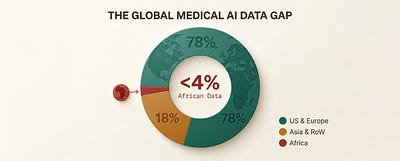
AI can help health care in Africa, but big hurdles remain. The first is a shortage of local data. AI systems learn from large, high-quality datasets, yet many African countries have limited records or inconsistent reporting. Models trained on patients in Europe or North America may not work well for African populations and can introduce bias.
Infrastructure is another barrier. Many rural clinics still face weak internet connections and unreliable electricity. Even when the tools exist, they can’t run without steady power and a solid network. A lack of skilled people adds to the problem. There are too few AI specialists, data scientists, and health workers with digital training, and many leave for higher-paying jobs abroad.
Ethics and safety are also critical. Health data must be protected from misuse and cyberattacks. Some AI systems are “black boxes,” making it hard to explain how they reach a diagnosis. If an automated chatbot gives poor advice, who is responsible? New tools could also deepen inequality if they reach only city hospitals while rural areas fall further behind.
Another worry is outside control. Much of the technology and funding comes from abroad, raising concerns about “digital colonialism” and whether Western rules for AI ethics fit African cultures and needs. And a larger question lingers: can AI fix weak hospitals, low pay, and system failures, or will it just mask deeper problems that need long-term investment?
The Road Ahead
AI could reshape health care in Africa over the next decade. Some estimates say it could save up to a million lives by 2030 and bring remote services to hundreds of millions of people. Faster and more precise detection of cancer, malaria, and TB is within reach. Doctors may use genetic data to guide treatment and lean on generative AI to help with complex decisions. Telemedicine will grow stronger through wearables that track vital signs, send early warnings, and make virtual visits easier for people in remote areas. AI can also scan huge data streams, from weather to social media, to spot and predict outbreaks of diseases like Ebola or cholera. Hospitals could use it to manage beds, plan staff needs, and keep medical supplies moving.
Several trends point the way forward. Local developers are working to build tools in African languages and to avoid bias. AI will pair with other technologies such as the Internet of Things and cloud computing. Wider internet access and more smartphones will feed the data these systems need. Investors are paying more attention to African health start-ups, including those led by women.
To make this future real and fair, countries will need to invest in digital infrastructure, train AI specialists, and keep talent on the continent. Strong local rules for data privacy and ethics must guide the work, with people, not just algorithms, making final decisions. Governments, health providers, tech companies, and international partners will have to plan and build together if AI is to deliver lasting gains.
Conclusion
Artificial intelligence offers Africa a rare chance to skip some of the slow steps that other regions took in building modern health systems. With the right choices, countries can use AI to expand care, cut costs, and reach people long left out of quality treatment.
Success will depend on African leadership and solutions built for local languages, cultures, and realities. Strong ethics and clear rules must guide how data is collected and how decisions are made. Technology can help, but it is only part of the answer.
The continent’s energy and creativity are already driving new ideas and partnerships. If governments, health workers, and innovators stay focused on people as well as tools, Africa can create a future where AI supports, not replaces, the human touch at the heart of care.