I sometimes think about a map from 1854. A doctor named John Snow mapped a cholera outbreak in London. He wasn’t just treating sick people. He was looking at data. He traced the outbreak to a single dirty water pump. By closing that pump, he saved countless lives. Snow was one of the first people to prove that our health is tied to the environment around us. Today, we need a modern version of that map.
In 2000, close to 10 million children died before their fifth birthday. That number is now cut in half, thanks to huge investments in vaccines and basic health care. We solved that crisis by focusing on human health. But the next big health crisis will not be solved by doctors alone.
Here is a fact that should worry everyone. Three out of every four new infectious diseases in humans come from animals. Think about it. COVID-19, Ebola, Avian Flu. They all jumped from animals to people.
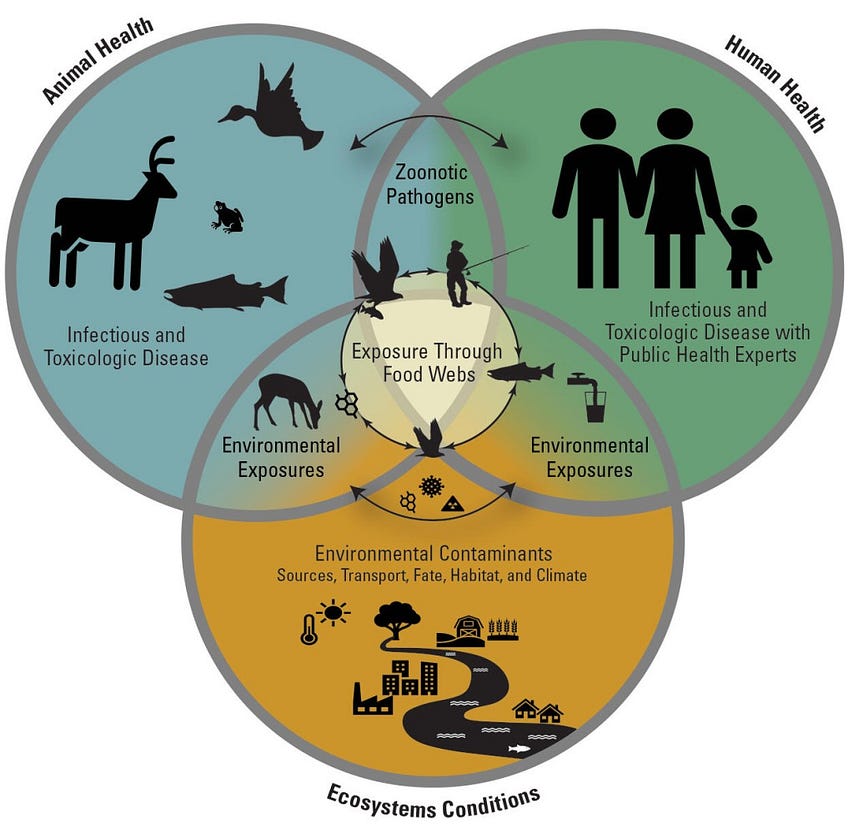
This is a stark reminder that human health, animal health, and environmental health are not separate things. They are deeply linked. This idea is called One Health. When we cut down forests, we bring people closer to new viruses in wildlife. When livestock get sick, that disease can jump to the farmer. When we pollute the water, it makes both people and animals ill.
The problem is that our defences against these threats are stuck in the past. We have human health systems. We have veterinary systems. We have environmental monitoring systems. They operate in silos. They do not talk to each other. When a cow gets a strange fever on a small farm, that data often stays with the local vet. It doesn’t get connected to global public health officials who could spot the start of a new outbreak.
The stakes are personal and global. A fragmented system means we are always reacting too late. It means a local illness in one corner of the world can quickly become a deadly, expensive global pandemic. We need a way to see the whole picture in real time. We need to create one unified health map of the planet.
From Cholera Maps to AI-Driven Global Security
It may seem new, but the idea that health is connected has been around for centuries. What’s changed is how we watch and react to those connections.
Look at John Snow’s famous 1854 cholera map. He carefully mapped the outbreak in London. Even though it was simple, it was an early way to use data for public health. It showed how a disease spread so people could stop it.
The modern “One Health” movement officially started in 2004 with the 12 Manhattan Principles. This document called for experts to work together. It urged scientists, policymakers, and doctors to stop working alone. The goal was to combine information about human, animal, and environmental health.
The first digital steps were slow but promising.
In 2006, three global organizations, FAO, WHO, and WOAH, created GLEWS. This Global Early Warning System focused on watching animal diseases. It was an early digital effort to predict and respond to threats worldwide.
Around the late 2000s, mobile phones became common. They quickly became important tools for reporting diseases and collecting data, especially in rural areas.
By 2009, the CDC created its One Health Office. This showed a formal commitment by a major public health group to share data between human and animal health sectors.
The real digital growth started in the 2010s and is still speeding up.
In the mid-2010s, mobile technology became advanced. Apps like AfyaData let communities report health events in real time. This gave valuable information about disease patterns and outbreaks.
As more data was collected, people demanded FAIR data in the late 2010s. FAIR means data must be Findable, Accessible, Interoperable, and Reusable. Collecting data wasn’t enough. To be useful, data had to be easy to find, understand, and combine across different systems.
Then came AI. It suddenly became part of everything we do. AI can analyze huge amounts of data. It promises to find patterns and predict outbreaks very accurately. AI’s potential to change One Health was obvious right away.
The COVID-19 pandemic in 2020 was the ultimate driver for change. It showed how vulnerable health systems are when they don’t share information. The pandemic forced more data sharing. It quickly increased the use of remote medicine and sped up the creation of quick digital response systems.
In 2021, the “One Digital Health“ framework was formally introduced. This brought the two powerful concepts together. The framework is a plan to use digital tools to support One Health goals. The aim is to create a more joined-up, strong, and fair approach to global health security.
What’s Happening Now
The One Digital Health (ODH) framework is a guide. Think of it as a steering wheel. One Health and Digital Health are the keys that lead to better health for people, society, and nature. This framework covers many important areas.
These include talking with citizens, education, watching the environment, combining human and animal healthcare, and using new technologies in medicine.
Many groups are pushing ODH forward. The Quadripartite includes World Health Organization , FAO , WOAH, and UNEP. They are working together on several projects. Groups like the ODH Think Tank in Portugal are finding new ways to innovate. Universities like Cornell and UZH are doing advanced research. Their work focuses on using AI for animal diagnosis and mixing different health data sources.
The technology for ODH is wide-ranging and active. Exciting real-world uses are appearing everywhere.
Technology Examples
- Eyes in the Sky and Smart Sensors Drones, remote sensing, and environmental sensors are being used. They track things like deforestation and pollution. They also study how wildlife migrates. This gives valuable data on the health of natural systems.
- AI as a Health Detective Platforms like ProMED-mail and HealthMap use AI. They predict disease outbreaks, like Ebola, avian flu, and COVID-19. They catch these diseases before they spread widely. This allows for quick action.
- Wearables for All Smart collars for pets and ear tags for farm animals are used now. They watch vital signs and behavior. This helps find sickness early and improves animal well-being./
- Vet-on-Call Remote healthcare is also for animals. Apps like **iCow and VetAfrica**00 give remote support. They help farmers and vets manage animal health.
- Smart Cities and Healthy Coexistence A study showed how smart medical devices can monitor a woman and her dog in a city. This system can predict possible health problems for both of them.
These digital tools create a huge amount of data. This data must follow the FAIR principles. It needs to be Findable, Accessible, Interoperable, and Reusable. This ensures true collaboration. It lets us fully use the data to meet One Health goals.
The Elephant in the Room
Even with huge potential, One Digital Health (ODH) faces big problems. We must solve these issues now.
Data and Ethics
Privacy versus progress Collecting a lot of sensitive health data brings up hard questions. Who owns the data? How do we keep it secure and private? We need to balance the good that comes from this data against the need to protect people’s privacy. This debate is complex and never stops.
The digital divide Not everyone has a smartphone or good internet. Not everyone knows how to use digital tools. This lack of access creates a digital divide. It could prevent vulnerable people from getting the benefits of ODH. We must ensure fair access to digital tools and training for everyone.
AI’s ethical risks We rely more and more on AI. This raises worries about bias, fairness, and transparency. We must make sure AI systems are developed and used ethically. Their decisions must be understandable. We need to hold these systems accountable.
Technical and Financial Hurdles
Difficulty connecting systems Human health, animal health, and environmental monitoring systems often work separately. Combining these different digital systems is a huge technical challenge. We need to create shared data rules and standards. This is the only way to make all systems work together smoothly.
The cost problem Building, setting up, and keeping up advanced digital systems costs a lot of money. We need to decide who pays for these big investments. We also need to make sure ODH projects can last a long time.
Dealing with false information Digital tools can spread true information quickly. However, they can also spread false health information. Fighting health misinformation is key. We must also teach people how to spot good information online. This is necessary to keep the public healthy.
The future of One Digital Health (ODH) is full of exciting possibilities. Here’s what we expect to see.
Smarter AI and Faster Connections
AI gets even better We will see big steps in AI for health. This includes better diagnoses and personalized treatments for people and pets. AI models will also predict problems with more accuracy. They will forecast disease outbreaks, pollution levels, and the effects of climate change. AI will become a vital tool for protecting health and the environment.
A hyper-connected world New network tech like 5G and Wi-Fi 7 will enable seamless, real-time data flow. This will happen even in remote areas that don’t have good service now. Imagine a sensor in a far-off forest instantly sending updates to a city hospital.
New Devices and Biotech
Health monitoring everywhere Wearable devices will become much more advanced. Tiny, simple patches will offer “hospital-grade” health readings. Medical devices will connect to the internet and blend into our homes, farms, and wild areas. This allows for constant checks on health and environmental conditions.
Biotech breakthroughs Advances in genetic engineering and stem cell research will transform things like disease resistance and treatments. They will also improve food security. These new molecular tools will help us solve global health problems.
Systems and Sustainability
Self-learning health systems The main goal is to build dynamic systems. These systems will always collect, combine, and analyze data across the entire planet. They will constantly learn and improve their performance based on new information.
Focus on a green economy ODH will be key to tracking how we use resources and create waste. It will help us promote sustainable practices. This ensures that the digital technologies we use don’t hurt the environment themselves.
Global fairness We expect ongoing work to set up dedicated global rules. These rules will ensure fair access and responsible data sharing. The goal is to make sure everyone benefits from ODH, no matter where they live or how much money they have.
Which of these future possibilities, like AI diagnostics or hyper-connected systems—do you think will be the most impactful in the next five years?
A Healthier Future for All
One Digital Health (ODH) changes everything about how we understand and manage health globally. It is not just a new trend in technology. It is a completely new way to think.
By linking people, animals, and the planet with smart digital tools, we can get ahead of diseases. We can protect different types of plants and animals. We can build a truly sustainable future for everyone.
This path has clear challenges. We face ethical issues, worries about privacy, and technical roadblocks. But we can succeed with careful planning and real teamwork. We must also always focus on fairness. If we do this, ODH offers the promise of a world that is healthier, stronger, and more equal for generations to come.